
How Is Mesothelioma Diagnosed?
Mesothelioma is most effectively diagnosed by a specialist who understands the nuances of this rare cancer and what to look for. However, most people start with their primary care doctor to rule out more common conditions, as many early symptoms of mesothelioma aren’t specific.
When establishing a diagnosis for mesothelioma, your doctor will determine if there’s cancer present, where it started, and whether it’s spread to other parts of the body.
The basic steps for a mesothelioma diagnosis include:
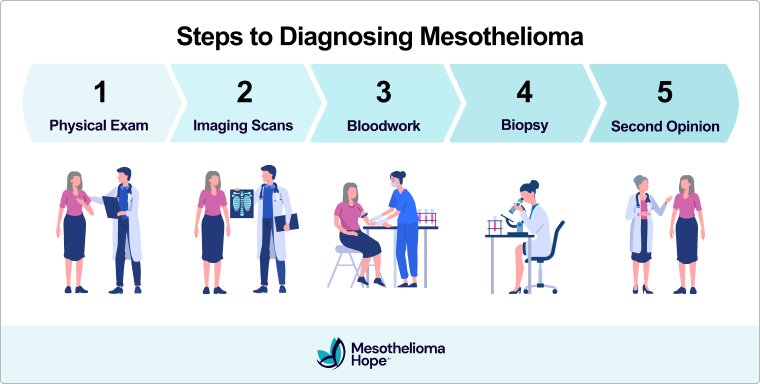
- Physical exam. During your initial exam, the doctor will ask about your symptoms to get a full picture of your health. It’s important that you share everything you’ve noticed, such as fatigue, weight changes, chest pain, and any shortness of breath.
- Imaging scans. If mesothelioma is suspected, your doctor will likely order imaging tests such as X-rays, CT scans, MRIs, or PET scans. These scans allow doctors to look inside your body for tumors, fluid buildup, or thickening in the lining of the lungs or abdomen.
- Bloodwork. Blood tests may be used to check your overall health and look for certain biomarkers that can be elevated in mesothelioma patients. While blood tests alone cannot diagnose mesothelioma, they can provide additional clues and help doctors determine whether further testing is needed.
- Biopsy. A biopsy is the only way to confirm a mesothelioma diagnosis. During this procedure, doctors remove a small sample of tissue or fluid so a pathologist can examine it under a microscope to look for cancer cells.
- Second opinion. Consider seeking a second opinion from a mesothelioma specialist before starting treatment, especially if your diagnosis came from a general physician. Specialists have more experience diagnosing and treating this rare cancer.
This is the standard process for patients who go to the doctor with specific symptoms to address. Some patients are also diagnosed with mesothelioma during surgery or treatment for another condition.
If you’re looking for a doctor who can help with diagnosing mesothelioma, offering a second opinion, or developing a care plan for you or a loved one, use our Free Doctor Match to find a specialist near you.

Tests Used to Diagnose Mesothelioma
Because the symptoms of mesothelioma are vague, your doctor will likely need to perform a series of tests to narrow down the cause.
The process usually starts with simple tests and moves to more advanced ones if something needs a closer look. Many patients see several different doctors before they’re referred to a mesothelioma specialist.
Physical Exam and Medical History
The initial consultation step of the diagnostic process includes a thorough physical examination and a detailed medical history. During the exam, your doctor will check for any noticeable abnormalities, like lumps or swelling.
When discussing your medical history, your doctor will want to know about all of your symptoms and concerns, any existing conditions, and possible risk factors for various illnesses. It’s important during this step to share any known or suspected history of asbestos exposure.
If you suspect you were exposed but don’t know for sure, it’s still worth mentioning to help give your doctor a full picture of your history and where to look next.

“Getting a mesothelioma diagnosis can be very scary. So many people go on Google and find either misinformation or information that doesn’t apply to their individual situation. Mesothelioma is not a guaranteed death sentence — there are options that you have.”
Imaging Scans
Doctors use imaging scans to get an internal view of your body, seeing where possibly cancerous fluids, tumors, or masses have formed.
Some of these tests allow doctors to see the size and location of a potential tumor, while others provide a look at the behavior of cells within the body.
Common types of imaging scans include:
- X-rays. An X-ray uses electromagnetic radiation to produce an image of the inside of the body. According to the American Cancer Society (ACS), chest X-rays are typically the first test a doctor will order for malignant pleural mesothelioma.
- CT scans. A computed tomography (CT) scan creates a more detailed and comprehensive image of the body than an X-ray to locate potentially cancerous growths.
- MRI scans. A magnetic resonance imaging (MRI) scan is similar to a CT scan, but it uses radio waves and magnets instead of X-rays to highlight possible tumors.
- PET scans. A positron emission tomography (PET) scan uses a low dose of radioactive sugar to detect cancer cells. Your doctor may use this scan to see if the cancer has spread to lymph nodes or other parts of the body.
The results help doctors determine whether a biopsy is needed and guide the next steps in mesothelioma diagnosis and treatment planning.
Bloodwork and Biomarkers
Your doctor may order blood tests to check your kidney and liver function, as well as your red and white blood cell counts.
Mesothelioma increases the levels of certain proteins and molecules in the blood, such as fibulin-3 and soluble mesothelin-related peptides (SMRPs). These substances can be detected through various mesothelioma blood tests as ordered by your oncology (cancer) doctor.
Specific types of mesothelioma blood tests include:
- SMRP test. The most common mesothelioma blood test is the SMRP test (MESOMARK®). It looks for heightened levels of SMRPs, substances that develop in the blood if mesothelioma cells are present.
- N-ERC test. This test can determine if a substance called N-ERC (mesothelin) is present in the patient’s blood. Some studies suggest the N-ERC test may detect mesothelioma earlier than MESOMARK®, though neither test can confirm a diagnosis.
- Osteopontin test. Osteopontin is a naturally occurring protein that increases when a person has mesothelioma. An osteopontin mesothelioma blood test can determine whether a patient has cancer, but does not indicate what type.
- MPF test. This can detect megakaryocyte potentiating factor (MPF), a protein found in the blood of mesothelioma patients.
Mesothelioma can’t be diagnosed with blood tests alone, so they’re used less frequently by specialists than imaging scans and biopsies.
Biopsies
A biopsy is the only way to confirm mesothelioma. Doctors often start by draining fluid from around the lungs (thoracentesis) or abdomen (paracentesis). That fluid is tested through cytology, where specialists check for cancer cells under a microscope.
Sometimes cytology can detect mesothelioma, but fluid samples don’t always give a clear answer. If the results are inconclusive, doctors usually recommend a tissue biopsy to get a more reliable mesothelioma diagnosis.
This is commonly done through thoracoscopy (VATS), a minimally invasive procedure that allows doctors to remove a small piece of tissue for testing. Once the diagnosis is confirmed, your doctor can move forward with staging and treatment planning.
Asking the right questions can make a big difference when meeting with a mesothelioma specialist. Download our Free Checklist of 14 Questions to Ask Your Doctor to get the answers you need to make informed decisions about your care.

Top Challenges of Diagnosing Mesothelioma
Many patients struggle to get an accurate mesothelioma diagnosis. It’s a very rare cancer, and it can take decades to develop after asbestos exposure. Primary care and general oncologists may lack experience with mesothelioma, so they might not think to test for it.
Some of the biggest challenges include:
- Latency period. It can take 10-50 years after asbestos exposure before noticeable symptoms of mesothelioma appear. This long latency period (time between asbestos exposure and a malignant mesothelioma diagnosis) means patients may not even remember being exposed to asbestos-containing products.
- Lack of specialization. Mesothelioma is a very rare cancer, and many doctors don’t know how to diagnose and treat it. This can make the diagnosis process much longer, as they won’t know which tests to order and how to quickly determine what’s going on.
- Nonspecific symptoms. In many cases, early signs of mesothelioma are brushed off as the flu or allergies. Patients may not suspect that their relatively mild symptoms could be caused by mesothelioma, and don’t know to get checked out until their symptoms worsen.
Recent clinical studies published between 2023 and 2025 show it takes about 3 to 6 months from the first symptoms to a confirmed mesothelioma diagnosis. It can take months longer if early symptoms are first treated as pneumonia, COPD, heart failure, or another common condition.
Mesothelioma Misdiagnosis
A mesothelioma misdiagnosis can occur when mesothelioma is incorrectly diagnosed as another condition, or when the stage or cell type is incorrect.
The two most common types of mesothelioma are pleural mesothelioma, which affects the lining of the lungs, and peritoneal mesothelioma, which starts in the lining of the abdomen. Both types are often mistaken for other common illnesses with similar symptoms.
Mesothelioma may be misdiagnosed as:
- Bronchitis
- Chronic obstructive pulmonary disease (COPD)
- Coronary artery disease
- Crohn’s disease
- Emphysema
- Irritable bowel syndrome (IBS)
- Testicular infection
- Other forms of cancer, like lung cancer
Getting a second opinion from an experienced specialist can help ensure you have the correct mesothelioma diagnosis. That means not only determining if cancer is present, but also identifying the stage and cell type. A specialized mesothelioma doctor can also help ensure you receive the most effective treatments for your diagnosis.

“One of the most important things I tell patients is to find a doctor who truly specializes in mesothelioma at a facility that treats many cases per year. Experience matters when it comes to mesothelioma.”
Patient Stories of Mesothelioma Diagnosis
Each person’s medical journey is unique, but hearing how other mesothelioma patients were diagnosed can help you see the different paths to treatment.
Below, learn what symptoms led three mesothelioma patients to seek medical care, the tests they underwent, and how they were diagnosed.

John Stahl
- Initial symptoms: Fatigue, shortness of breath, feeling off
- Appointments: Urgent care center, primary care visit, and then referred to an oncologist
- Tests: X-ray of lungs followed by CT scan
John was diagnosed with stage 4 pleural mesothelioma. Read John’s full story here.

Alexis Kidd
- Initial symptoms: Abdominal pain
- Appointments: Unrelated gallbladder surgery
- Tests: Tissue biopsy from diaphragm
Alexis was diagnosed with peritoneal mesothelioma. Read Alexis’s full story here.

John Panza
- Initial symptoms: Flu-like symptoms
- Appointments: Doctor visit and two thoracentesis procedures to remove fluid around the lungs that kept returning
- Tests: Chest X-ray, which found pleural effusions (fluid collection), followed by VATS (video-assisted thoracoscopic surgery)
John was diagnosed with stage 3 pleural mesothelioma. Read John’s full story here.
What to Expect After a Mesothelioma Diagnosis
A mesothelioma diagnosis can feel scary and overwhelming. It’s normal to feel shock, fear, anger, or confusion. Taking time to process the news is important. Not every decision has to be made right away.
After a diagnosis, doctors focus on gathering detailed information about the cancer. This helps them understand how serious it is and how best to treat it. The next steps usually center on three key areas: staging, identifying the cell type, and building a treatment plan.
1. Determining Cancer Stage
One of the first steps after a diagnosis is determining the mesothelioma stage. Staging measures how far the cancer has spread in the body.
Doctors use imaging tests and biopsy results to see if the cancer is limited to one area or has spread further. The stage helps guide treatment decisions and gives a clearer picture of what to expect moving forward.
2. Identifying the Cell Type
Another important step is identifying the mesothelioma cell type. There are three main types: epithelioid, sarcomatoid, and biphasic. Each type may respond differently to treatment.
The cell type is confirmed through the biopsy. This information helps doctors choose therapies that are most likely to control your cancer and improve your prognosis.
3. Treatment Planning
Once the stage and cell type are known, doctors develop a personalized treatment plan. Mesothelioma treatment may include surgery, chemotherapy, immunotherapy, radiation therapy, or participation in clinical trials.
The goal of any therapy is to control the cancer, reduce symptoms, and improve quality of life. Doctors often recommend multiple mesothelioma treatments for the best results.
4. Managing Quality of Life
In addition to medical treatment, your overall health and wellness will be impacted by a mesothelioma diagnosis. Good nutrition, light physical activity, and supportive care can help strengthen your body to fight the cancer.
Emotional and practical support also matter as you navigate a loss of energy and ability to do certain things. Mesothelioma support groups and counseling resources can help patients and their families feel less alone.
Get Help With a Mesothelioma Cancer Diagnosis
Wherever you are in your mesothelioma journey, you are not alone. Mesothelioma Hope is committed to walking alongside you every step of the way.
Our Patient Advocates are here to:
- Connect you with a mesothelioma specialist for a diagnosis or a second opinion
- Empower you with information and questions to ask your cancer care team
- Help you navigate insurance to understand which tests will be covered
- Walk you through what to expect during different scans and procedures
Call us any time at (866) 608-8933 or use our Free Doctor Match service to get started.
Diagnosis of Malignant Mesothelioma FAQs
How do they diagnose mesothelioma?
Doctors diagnose mesothelioma through a combination of physical exams, imaging tests, and a biopsy.
The diagnostic process usually starts with a physical exam and imaging tests such as X-rays, CT scans, MRIs, or PET scans. These tests help doctors look for tumors, fluid buildup, or thickening of the lining of the lungs or abdomen.
However, the only way to confirm mesothelioma is with a biopsy. During this procedure, doctors remove a small sample of tissue or fluid so a pathologist can examine it under a microscope for cancer cells.
What is the gold standard for diagnosing mesothelioma?
A biopsy is the gold standard for diagnosing malignant mesothelioma. While imaging tests and bloodwork may strongly suggest mesothelioma, doctors can’t diagnose the disease without examining cancer cells directly.
A biopsy allows specialists to confirm mesothelioma and determine the exact cell type. This step is key as treatment options depend on a precise diagnosis.
How can you tell if you’ve got mesothelioma?
The only way to know for sure if you have mesothelioma is to be diagnosed by a mesothelioma doctor.
Common symptoms may include shortness of breath, chest or abdominal pain, fluid buildup, fatigue, and unexplained weight loss. However, these symptoms are often mistaken for less serious conditions.
If you’re experiencing symptoms or believe you were exposed to asbestos, you should see a doctor right away for a mesothelioma screening.
Will a CT scan show mesothelioma?
A CT scan may show signs that suggest mesothelioma, but it can’t confirm the disease on its own.
CT scans can reveal:
- Enlarged lymph nodes
- Fluid buildup (pleural effusion)
- Thickening of the lung lining (pleura)
- Tumors or masses
If your CT scans show any of the signs listed above, your doctor may order more imaging tests or a biopsy to help confirm a diagnosis of mesothelioma.
How do I get tested for mesothelioma?
If you think you may have mesothelioma, you should schedule an appointment with a doctor as soon as possible.
The testing process usually includes a physical exam, imaging scans, and possibly blood tests. If these tests suggest mesothelioma, your doctor will recommend a biopsy to confirm the diagnosis.
Because mesothelioma is rare and hard to diagnose, seeing a specialist can help ensure you get accurate results. Contact us today to find an experienced mesothelioma doctor in your area.
What is the average age of mesothelioma diagnosis?
According to the American Cancer Society, the average age of diagnosis for mesothelioma is 72 years old.
Mesothelioma can take decades to develop after asbestos exposure. Because of this long latency period, most people are diagnosed later in life.
However, many people have also been diagnosed in their 40s and 30s or even younger, so it’s important to see a specialist if you’re having any concerning symptoms.