

We sat down with our Chief Patient Care Advisor to learn more about the mesothelioma treatment journey, why this work matters to her as a nurse, and how her team supports patients and families.
For National Nurses Week, we’re proud to recognize the nurses who support mesothelioma patients, families, and caregivers every day.
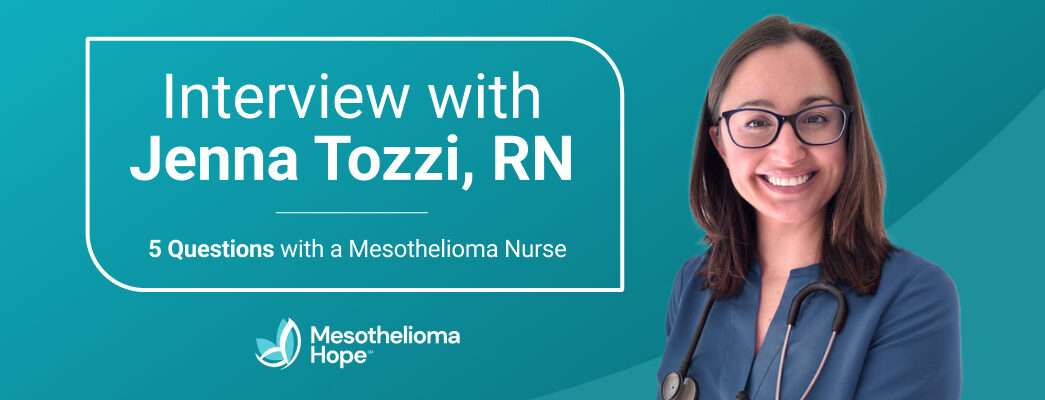
We spoke with Jenna Tozzi, a multi-state registered nurse and Chief Patient Care Advisor at Mesothelioma Hope, about how she and her team help patients understand their diagnosis, find the right specialists, and access the support they need during one of the most overwhelming times in their lives.
With more than 15 years of experience in rare cancers, Jenna works closely with patients and families across the country so they don’t have to face mesothelioma alone.
“Early in my career, I saw how important it was for a patient to be cared for holistically. Since then, I have been advocating for children and adults diagnosed with rare diseases.”
Below, Jenna answers 5 questions from families like yours about navigating a mesothelioma diagnosis.
1. What exactly is a Patient Advocate?
A Patient Advocate is someone who acts as an extra layer of ongoing support throughout your journey with mesothelioma.
We provide active listening, personalized medical information, emotional support connections, and financial resources to patients and their loved ones.
Patient Advocates help patients make informed decisions about their care, ensuring their goals and wishes are heard and respected.
With our team’s deep expertise in the medical field, we’ll walk with you through all aspects of your mesothelioma journey. We’re here to empower you to find the specialists you need, fully understand your options, and maximize those doctors appointments to get the right care delivered on your terms.
Our goal as Patient Advocates is to arm everyone with the resources to overcome challenges related to a cancer diagnosis. Every person we talk to has a different journey, so we tailor our services to meet the needs of our patients and families.
One way we can support you is by connecting you with a mesothelioma specialist through our Free Doctor Match service. Sign up now to get started.
2. How has your personal experience influenced your role?
As the daughter of an emergency room physician, I was fascinated by science and anatomy from a young age. My father would take me to work with him, and I would sit at the nurse’s station and ask questions — and then go home and read his medical textbooks and play with his stethoscope.
Later on, my interest in medicine turned into a personal experience when I was diagnosed with a rare disease as a teenager. I had to stop going to school and travel to various specialists for second opinions and treatment recommendations.
Despite my family’s professional medical experience, they found it difficult to navigate the diagnosis and adapt to a different kind of life.
“Following treatment, I was challenged with many long-term side effects. To effectively manage my own care as a young adult, I had to become my own best advocate. Understanding how daunting this can be has given me the drive to empower others to help overcome health care obstacles.”
My experiences have given me the ability to prepare other families for hurdles that may arise after being impacted by a mesothelioma diagnosis.
3. What does the word “hope” mean to you?
To me, hope is largely about feeling empowered to make your own decisions and fight for another day with the people and experiences that make life worth living.
As a mesothelioma nurse, my goal is to help inspire hope for patients going through this difficult time.
I try to do this in three main ways:
- Providing reassurance and encouragement to push through the difficult times
- Building resilience by educating and empowering patients
- Being present and offering a listening ear to someone going through their darkest moments
Health care can be confusing and complicated, but I find that when patients understand their diagnosis, treatment options, and ways to improve their quality of life, they feel more in control of their cancer journey.
4. What are some key considerations for each stage of the mesothelioma journey?
Everyone has a different cancer journey, and those facing unfavorable diagnoses experience the biggest challenges and hardships. That said, there are a few common phases of a mesothelioma journey.
The Newly Diagnosed
The biggest suggestion I would give at this point is to get educated on all things mesothelioma.
This includes:
- Reviewing your pathology report
- Asking about screening tests to inform your care
- Learning your treatment options
- Understanding symptom management
- And more
Connecting with a mesothelioma cancer center with a multidisciplinary treatment team allows you access to resources like surgery and oncology expertise, pain management, palliative care, diet and nutrition support, chaplains, and more.
Facing a Cancer Recurrence
If your mesothelioma comes back (recurs) after treatment, know you have options — even if you feel like you don’t.
While there may be limited FDA-approved treatment options for mesothelioma recurrence, now would be the time to seek out a clinical trial and consultations with top mesothelioma researchers.
Navigating Survivorship
Palliative care is your best friend through this process. You may experience unwanted long-term side effects from treatment, but you can enhance your quality of life by taking charge of it.
Your mental and emotional health also matters. Consider starting a gratitude journal to help you cultivate a focus on positive experiences.
Families Grieving a Loved One
Many families will experience anticipatory grief after a mesothelioma diagnosis. That is normal, and you are not alone. By connecting with a Patient Advocate, you can access tools to help you cope with some of the challenges that may arise when you are preparing for a loved one as they transition to the end of life.
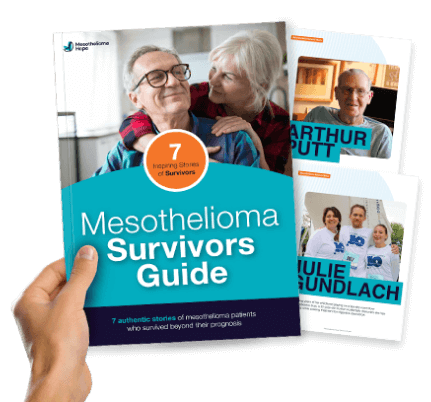
Read stories from patients and families who have faced mesothelioma, and find guidance and support in our Free Survivors Guide.
5. What advice would you give to someone who’s been diagnosed with mesothelioma?
You are in the driver’s seat. You must prepare for your appointments to get the most out of them and to make informed decisions on how to proceed with your life.
“Getting diagnosed with a rare cancer is life-changing. I want patients to know that they can take control of their journey with mesothelioma and that I will be there with them every step of the way.”
Resources — and the support of Patient Advocates like me and my team — are at your fingertips. I had to learn in my own life not to be afraid to ask questions and take advantage of these resources to overcome barriers to care.
I record my doctor’s appointments, prepare a list of questions before every appointment, and utilize my support system to help me make decisions.
I encourage anyone who has been diagnosed with mesothelioma (or loves someone who has) to do the same. Take back control wherever you can, and know that your life still belongs to you.
Get Support From Mesothelioma Hope
If you or a loved one has been diagnosed with mesothelioma, Jenna and her team are here to help you navigate what comes next.
When you reach out, you’ll be connected with a Patient Advocate who can:
- Listen to your situation and answer your questions
- Connect you with experienced mesothelioma doctors
- Guide you through treatment and side effects
- Find support groups for you and your family
You don’t have to figure this out on your own. Call (866) 608-8933 or connect with us online to get free support 24/7.