


A devoted mother shares how a mesothelioma diagnosis upended her life — and how she’s worked to rebuild it with hope and determination.
Julie Gundlach was given 6-12 months to live after being diagnosed with mesothelioma in 2006.
“They told me to get my affairs in order,” she recalls, noting that her medical team didn’t expect the treatment to work. But that was nearly 20 years ago.
Today, Julie lives one day, one moment at a time, and has built a life that is colored but not consumed by her cancer. Part of that life includes being a passionate advocate for others who were blindsided by a mesothelioma diagnosis after being unknowingly exposed to asbestos.
“Never give up hope — and remember that your life is yours, not the disease’s.”
– Julie Gundlach, peritoneal mesothelioma survivor
A Life-Changing Diagnosis
Julie was only 35 when she started having digestive issues in August 2006. Her symptoms were so concerning that she booked an appointment with her doctor. She anticipated a routine office visit and maybe a prescription or two before getting back to enjoying the summer with her 3-year-old daughter, Madeline.
Instead, imaging scans revealed a mass in Julie’s pelvis. She was scheduled for surgery for what was assumed to be ovarian cancer.
Her surgeon discovered something far more unexpected: peritoneal mesothelioma, a rare asbestos-related cancer that forms in the abdominal lining.
“I didn’t know what mesothelioma meant. I thought this could not even be possible.”
– Julie Gundlach, peritoneal mesothelioma survivor
Julie’s father was exposed to asbestos every day during his job installing electrical systems. Not knowing the dangers, he would come home from work and throw his asbestos-covered clothes in the laundry room, which also served as a playroom when Julie was a child. This secondhand exposure is what eventually led her to develop mesothelioma.
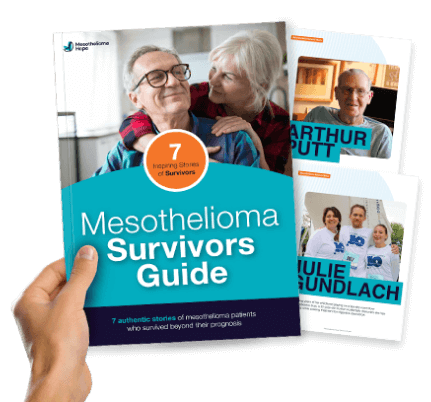
Many patients are blindsided by their diagnosis. Read more stories of navigating life with mesothelioma in our Free Survivors Guide.
Battling Through Treatment
Julie qualified for mesothelioma treatment, but her medical team didn’t give her much hope. “They used the phrase, ‘We’ll throw some chemo at it, but we don’t expect it to work,” Julie recalls.
The road ahead was grueling. She faced countless rounds of chemotherapy and over 20 trips to New York for cytoreductive surgery. Each procedure lasted 8-12 hours and was followed by lengthy hospital stays. One particularly life-threatening complication left her in a medically induced coma for a month.
Julie is grateful to be alive, but she mourns how much time she lost — time for herself, time with Madeline — to all the surgeries, recovery time, and brain fog from chemotherapy.
“There’s a public perception that a cancer patient has walked through fire and been purified by the experience. But that’s inaccurate.”
– Julie Gundlach, peritoneal mesothelioma survivor
Despite these hardships, Julie kept fighting, not just for herself but for others facing similar battles. She now shares her story in hopes it will give others the courage to stay strong.

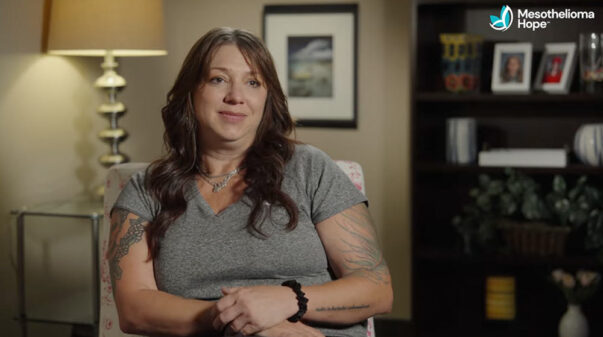
Julie Gundlach shares her powerful story of living with peritoneal mesothelioma after being diagnosed when her daughter was just three years old. She reflects on the disbelief, gratitude, anger, and grief that come with long-term survival. View Transcript.
Duration: 3 min 35 sec
When I reflect on almost 20 years of survival, it is with a sense of disbelief and gratitude, still tinged with sadness and anger. I often wonder what the last two decades would have looked like if so much of it hadn’t been stolen by mesothelioma. But the journey has also led me somewhere meaningful—sharing my story, my hope, and my experience with others.
My name is Julie Gunlock, and I was diagnosed with malignant peritoneal mesothelioma in August 2006. At the time, my daughter was only three years old. I was terrified she wouldn’t remember me. That was my biggest fear. Because of that, I decided early on that I would go to any length to save my life—whatever it took.
A diagnosis like mesothelioma or cancer can easily consume and steal your life. You have to intentionally search for laughter and joy. You have to find places where you can just be yourself, separate from the cancer. There are always chronic health issues. There is anxiety and depression. There is constant fear—especially around scans and follow-up appointments. There is also the lasting impact on your family, the moments you miss while your child is growing up, and the times you simply cannot be there. It’s something you carry with you. I try not to let it make me bitter. I think that’s all you can do.
Doctors have never used the words “cancer-free” or “remission” with me. They still see tumor spots on my scans. However, they have remained stable and have not shown growth for over ten years. For that, I am incredibly grateful.
Looking back, I believe there were many decisions that contributed to my long-term survival. The first was finding the very best doctors I could to treat my specific diagnosis. I made a conscious decision to trust them fully. Early on, a physician told me I would want to seek legal representation. At first, I resisted. I didn’t see myself as someone who would file a lawsuit. That wasn’t who I thought I was.
But then I had to confront the reality that this disease—this cancer—was 100% preventable. The only reason I have it is because corporations repeatedly chose profits over people. Those choices caused real harm, and those responsible should be held accountable.
I ultimately filed a mesothelioma lawsuit because people should be held responsible for putting profits over lives—and because I needed help.
Looking Back, Moving Forward
Although Julie was shocked to learn that she had mesothelioma, this wasn’t the first time her family had been impacted by asbestos.
Her father passed away from asbestos lung cancer shortly before Julie received her own diagnosis. This experience devastated Julie and filled her with anxiety about the future.
“My biggest fear was that my daughter would grow up and not remember her mother,” she said.
As months and then years passed, Julie found deep gratitude in the moments she shared with Madeline. She cheered her on at soccer games, taught her how to drive, watched her go to prom and graduate from high school, and saw her off to college.
“That is, without a doubt, a miracle. Getting to see a life I never thought I’d see.”
– Julie Gundlach, peritoneal mesothelioma survivor
Her cancer has remained stable since 2014, meaning it hasn’t grown or spread, allowing Julie to focus on living her life instead of fighting for it.
Milestone Markers
To mark two significant anniversaries since her diagnosis, Julie got tattoos symbolizing her fight for survival.
At her 5-year mark, she chose a peacock feather, moved by a story of a gray bird that ate poisonous fruit and transformed into the brilliantly colored creature we know today.
Julie sees herself in that bird — after breathing in a toxic substance and enduring a series of grueling treatments, she’s turned her struggles into a full and vibrant life.
“I knew I could be that peacock. I could ingest poison and turn it into something beautiful.”
– Julie Gundlach, peritoneal mesothelioma survivor
At Ease in Muddy Waters
Approaching her 10-year survivor anniversary, Julie finally felt confident enough to move forward and imagine a world beyond mesothelioma.
She and a friend visited several East Asian countries on a quest for discovery. During this trip, she was again inspired by nature and found the vision for what would become her next milestone tattoo.
At a Hindu temple, Julie saw pink lotuses growing along the muddy banks of some rice paddies. The spiritual significance of the flower sparked a sense of recognition in finding the beauty in the mud of her own experience and watching her life take root and blossom one petal at a time. She resonated with a Buddhist quote: “May I live like the lotus, at ease in muddy waters.”
This symbol had such a strong impact on Julie that she got a lotus flower tattoo and opened a pottery shop to combine her artistic skills with her unique view on life.
Finding Beauty in the Fight
Since her diagnosis, Julie has found meaning in raising awareness of the dangers of asbestos and the companies that profited from this cancer-causing material for decades.
She’s shared her story with news outlets, other patients and their families, and political leaders. She has visited Capitol Hill, rented booths at Earth Day festivals, and collected signatures demanding a comprehensive asbestos ban.
She can also be found at the annual Miles for Meso race organized by our partner law firm, Simmons Hanly Conroy, to raise money for mesothelioma research. Julie finished her local 5K event in St. Louis less than a year after major surgery.
“Miles for Meso means that somebody has my back…and somebody is amplifying my voice against the use of asbestos and the industry of corporate greed.”
– Julie Gundlach, peritoneal mesothelioma survivor
With the compensation from her lawsuit, Julie was able to pay for expensive life-saving treatments that have allowed her to keep fighting mesothelioma for nearly 20 years, even as her health insurance carrier tried to deny her coverage.
If you or someone you care about was diagnosed with mesothelioma, you deserve to fight back. Get a Free Case Review with our legal partners at Simmons Hanly Conroy and see if they can help you, just as they did for Julie and her family.
 Get a Free Mesothelioma Case Review

One Step at a Time
Julie’s life continues to be marked by medical appointments and follow-up scans to ensure her cancer remains stable.
However, she’s grateful that her life is so much more than her cancer, as she prioritizes the people and experiences that bring her joy and meaning.
Her advice to newly diagnosed patients and their families is to take it one step at a time.
“Keep the faith and keep putting one foot in front of the other.”
– Julie Gundlach, peritoneal mesothelioma survivor
Find Help and Hope After a Mesothelioma Diagnosis
If you or someone you love is fighting mesothelioma, remember you are not alone. Mesothelioma Hope provides free resources and compassionate support to help make your journey easier.
Reach out to our team to:
- Connect with top mesothelioma doctors
- Learn how to pursue compensation for medical expenses
- Speak with nurses who can help you understand your diagnosis
- Find support groups where you can talk to other patients
Call (866) 608-8933 today or reach out to us online to find the support you and your family deserve.