

Many people, especially those with a known history of asbestos exposure, have questions about their future. Knowing how to tell if you have mesothelioma means recognizing early signs and connecting with a doctor for professional testing.
It can be helpful to understand common risk factors, first symptoms, and how this cancer is diagnosed. However, the only definitive way to know if you have mesothelioma is to get a biopsy.
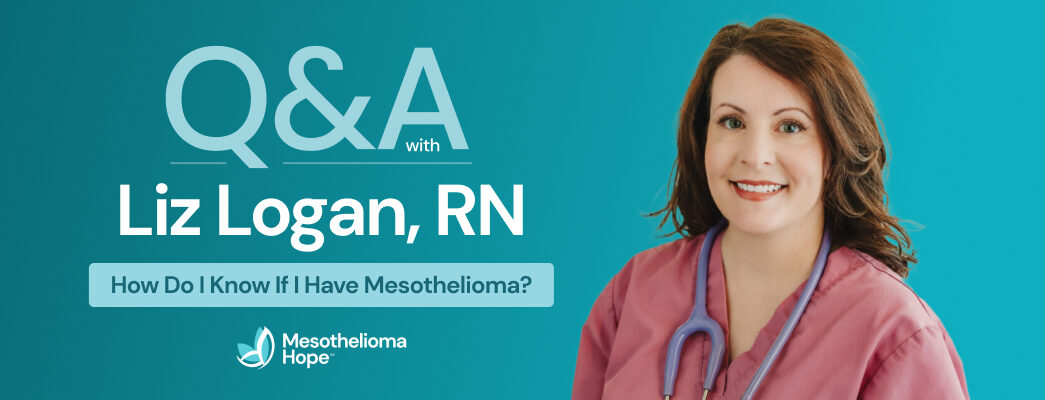
In this piece, Mesothelioma Hope’s Oncology Nurse Navigator, Liz Logan, RN, answers the most common questions on how to know if you have mesothelioma and what to do next.
What is the first symptom of mesothelioma?
There’s no definitive first symptom of mesothelioma. The first symptoms people notice typically have to do with where the cancer originates.
Because of the cancer’s long latency period, or time between asbestos exposure and symptoms, many early mesothelioma signs are mistaken for less serious conditions like allergies or a stomach bug. By the time symptoms are severe enough to see a doctor, the cancer may have advanced. If you know or suspect you were exposed to asbestos, tell your doctor if something feels wrong.
Have a specific question about symptoms or diagnosis? Fill out the form below to ask Nurse Liz directly.
Are there other early signs of mesothelioma?
Early symptoms of mesothelioma vary by where the cancer originates in the body. Pleural mesothelioma affects the lining of the lungs, while peritoneal mesothelioma starts in the abdominal lining.
Pleural mesothelioma signs include:
- A persistent dry cough
- Chest wall pain
- Pleural effusion (fluid buildup around the lungs)
- Shortness of breath
- Unexplained fatigue
Symptoms can look different with peritoneal mesothelioma because the disease causes gastrointestinal issues and fluid buildup in the abdomen.
People with peritoneal mesothelioma may experience:
- Abdominal swelling
- Ascites (fluid buildup in the abdomen)
- Bloating
- Changes in bowel habits
- Weight loss
Because these signs are so nonspecific, patients and even primary care doctors can attribute them to less serious health concerns.
How long can you have mesothelioma without knowing?
Mesothelioma may start developing a decade or more before patients have any noticeable symptoms. It’s a notoriously difficult cancer to catch early because of its long latency period, which is the 10-50 years between the initial asbestos exposure and diagnosis.
During this period, a person may have no symptoms or other indication that mesothelioma is developing.
Even after symptoms finally begin to manifest, people live with them for months, sometimes receiving treatment for more common conditions before undergoing further testing.
What age is mesothelioma most common?
Mesothelioma is most commonly diagnosed in older adults, particularly men over the age of 55. This is due to decades of historical occupational exposure in industries like construction, manufacturing, and the military, with veterans making up approximately one-third of all mesothelioma patients.
However, mesothelioma can happen to anyone, including younger adults and women. In some cases, spouses and children are exposed to asbestos through secondhand or take-home exposure.
Julie Gundlach was only 35 when she was diagnosed with peritoneal mesothelioma. Her exposure traced back to her childhood playroom, which was also where her father hung and washed his work clothes that were contaminated with asbestos.
Sadly, this disease does not discriminate by age, highlighting the importance of awareness and testing no matter your age.
Is there a test to see if you have mesothelioma?
There isn’t a single test that can immediately diagnose mesothelioma. Instead, doctors use a thorough process that rules out other conditions and investigates abnormalities found during their exams.
The diagnostic process for mesothelioma typically starts with a physical exam, moves into imaging (like CT scans and X-rays), and culminates in a fluid or tissue biopsy. Because early symptoms point toward many other illnesses, getting answers may require follow-up testing and seeing a specialist who knows what to look for.
Does mesothelioma show up in bloodwork?
Not exactly — routine bloodwork alone can’t diagnose mesothelioma, but researchers have identified certain biomarkers that can help identify and monitor the cancer. The MESOMARK® blood test, also known as the mesothelin test, measures soluble mesothelin-related peptides (SMRPs) in the blood, which are often elevated in patients with mesothelioma.
While biomarker blood tests are helpful for tracking disease progression or treatment response, they aren’t enough on their own. The only definitive way to confirm a mesothelioma diagnosis is through a biopsy, where a specialist examines a small sample of tissue under a microscope.
How is mesothelioma diagnosed?
Diagnosing mesothelioma is a multi-step process that typically begins with a thorough physical exam and a detailed review of your medical and occupational history. If anything that comes up at this point raises concern, your doctor will order imaging scans — such as X-rays, CT scans, or MRIs — to look at your chest or abdomen and identify any abnormal fluid buildup or tissue masses.
After imaging, the most important step for a definitive diagnosis is a biopsy. Depending on the tumor’s location, a specialist may perform a thoracoscopy, laparoscopy, or needle biopsy to collect tissue samples.
At this stage, it’s important to work with a mesothelioma specialist. Because this cancer is so rare, you’ll want the opinion and expertise of someone who has seen and treated it before. Even if your general oncologist diagnoses you with mesothelioma, getting a second opinion from a specialist can help ensure the stage, cell type, and other factors are correct — and get you ready for treatment.
Can mesothelioma be cured if caught early?
While there’s currently no definitive cure for mesothelioma, catching the disease in its earliest stages can offer a better prognosis and more treatment options.
Early intervention allows specialists to design aggressive, multimodal treatment plans that may combine surgery, chemotherapy, and radiation to target the cancer while it’s still localized.
Patients diagnosed early often have access to innovative clinical trials, novel immunotherapies, and specialized surgical procedures that are unavailable or ineffective in later stages. These advanced approaches offer the best possible chances of achieving long-term remission and maintaining a higher quality of life.
Connect With Nurse Liz for Mesothelioma Support
Wondering whether you or your loved one has mesothelioma can be scary. There’s a lot of alarming information out there, and not knowing what you’re facing can make it even harder. Our team is here to help.
Mesothelioma Hope’s Patient Advocates can:
- Listen to your story and symptoms
- Help you connect with a specialist
- Review your pathology report
- Sign you up for our support group
If you think you have mesothelioma, give us a call at (866) 608-8933 to learn more about your next steps.