

A newly reintroduced bill is drawing attention from patients, families, and advocates in the mesothelioma community.
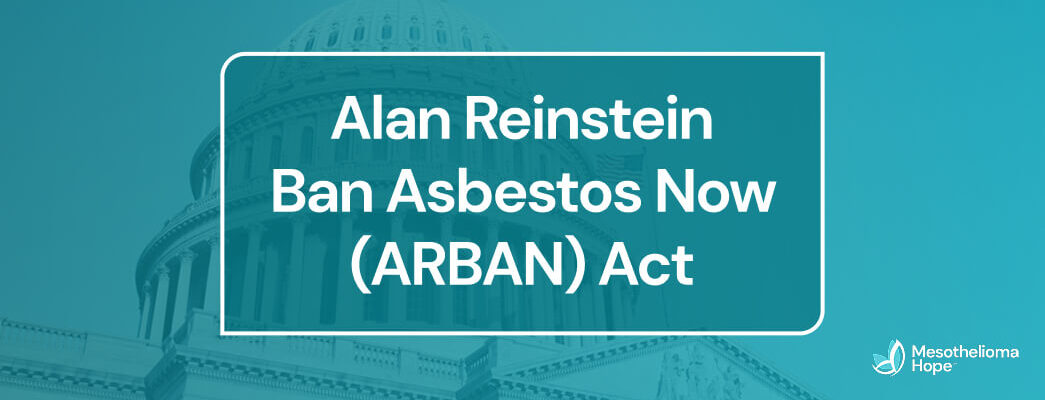
In August, two senators brought the Alan Reinstein Ban Asbestos Now (ARBAN) Act back before Congress. If passed, the measure would amend the Toxic Substances Control Act (TSCA) to completely stop all commercial uses of asbestos.
The ARBAN Act goes further than a 2024 ban on asbestos by the U.S. Environmental Protection Agency (EPA) to ensure that more families are kept safe from this harmful substance.
Learn more about the ARBAN Act, what it means for those impacted by mesothelioma, and what can be done to support it.
How the 2026 ARBAN Act Would Ban Asbestos
U.S. Senators Jeff Merkley (D-OR) and John Curtis (R-UT) reintroduced the Alan Reinstein Ban Asbestos Now (ARBAN) Act in August 2026.
This bipartisan bill would prohibit the manufacture, processing, use, and distribution of asbestos-containing materials.
The bill is named for Alan Reinstein, who died from mesothelioma. His wife, Linda Reinstein, co-founded the Asbestos Disease Awareness Organization (ADAO). Mesothelioma is only caused by asbestos, and the ADAO has spent more than two decades pushing for a full, unconditional ban on this harmful material.
Right now, the bill is awaiting action by the Senate. If the ARBAN Act becomes law, it will prevent any type of asbestos from being used or imported — with the goal that fewer families will have to face mesothelioma.
If you or a loved one is facing mesothelioma today, you’re not alone. Get our Free Mesothelioma Guide for help accessing treatments, financial resources, and support.
What Would the ARBAN Act Do?
Families may mistakenly believe that the United States no longer uses asbestos, but that’s not true. The ARBAN Act would finally stamp out asbestos for good.
In 2024, the EPA banned the ongoing use of chrysotile asbestos, the only type of asbestos still used in the United States. Before that time, partial bans meant that some asbestos materials were still being used throughout the country.
However, the EPA ban didn’t address legacy asbestos (materials left behind in older buildings) and allows industries to gradually phase out their asbestos use through 2037. Additionally, the EPA ban has faced legal challenges that could potentially derail it.
ARBAN solves these problems by:
- Banning all types of asbestos completely
- Encoding the EPA ban into federal law
- Tightening asbestos phase-out timelines
These measures would effectively prevent asbestos from being used throughout the U.S., joining nearly 70 other countries that already have total bans.
“Until asbestos is banned once and for all, American families remain at risk of the same diagnosis that took Alan Reinstein’s life in 2006. We are grateful to have champions from both parties, in both chambers, ready to act.”
– Asbestos Disease Awareness Organization
Will the ARBAN Act of 2026 Become Law?
Right now, it remains to be seen whether the ARBAN Act of 2026 will become law. The first ARBAN Act was proposed in 2016.
However, the 2026 version of the bill has received bipartisan support, as well as approval from corporations within the asbestos industry.
For example, the ADAO noted that Olin Corporation now supports the ARBAN Act. This company is one of the last three manufacturers using asbestos in American chlorine production.
Public health experts have long noted that there’s no safe amount of asbestos exposure. ADAO President Linda Reinstein has said that over 40,000 Americans die each year from preventable asbestos-related diseases.
There’s no way to eliminate the risk of getting sick after asbestos exposure. However, through the ARBAN Act, mesothelioma patients can get a measure of justice knowing that others won’t be harmed.

“Asbestos is still tightly regulated, but not outright banned in the United States, and it is a known killer.”
4 Steps to Protect Yourself and Your Family from Asbestos
While the ARBAN Act moves forward, there are ways that you can take action on your own to lower the risks associated with asbestos.
4 key steps to stay safe from asbestos include:
- Before any renovation, ask for a written asbestos inspection from an abatement professional. This is especially true if you live in a home built prior to the early 1980s, as asbestos was a common building material before then.
- At work, ask your employer about asbestos safety steps, training, and any required disclosures. Older offices, schools, and other structures could have asbestos. Without regular maintenance, your health could be in danger.
- As a renter, ask your landlord for any records showing whether the building has asbestos. If asbestos is present, ask what is being done to mitigate it.
- Don’t try to handle asbestos yourself. Always work with an abatement company that can do it for you. If you aren’t sure if the materials in question are asbestos, leave them alone and seek a professional’s opinion.
Besides these actions, you can also support the ARBAN Act by contacting representatives. You can visit the ADAO’s website for more ways to get involved.
Support the ARBAN Act and Get Help for Mesothelioma
The 2026 ARBAN Act offers a chance to completely ban asbestos for good in the United States. With support from both sides of the political spectrum as well as players in the asbestos industry, the hope is that Congress will vote the bill into law.
ARBAN is incredibly important to preventing more cases of mesothelioma — but it doesn’t undo the harm that’s already been done. If you or a loved one has been diagnosed with mesothelioma, you don’t have to go through it alone.
Mesothelioma Hope can help you:
- Connect with mesothelioma specialists and top cancer centers
- Learn about clinical trials and emerging treatments
- Understand your legal options for compensation
- Access emotional support and educational resources
Call us today at (866) 608-8933 or get our Free Mesothelioma Guide to see how we may be able to assist you.