

Immunotherapy for mesothelioma may help when other treatments don’t. With drugs like nivolumab (Opdivo®), ipilimumab (Yervoy®), and pembrolizumab (Keytruda®) now widely used, patients have more options than ever before.
Mesothelioma immunotherapy works by allowing the body to more easily find and destroy cancer cells. However, not all mesothelioma patients respond to immunotherapy.
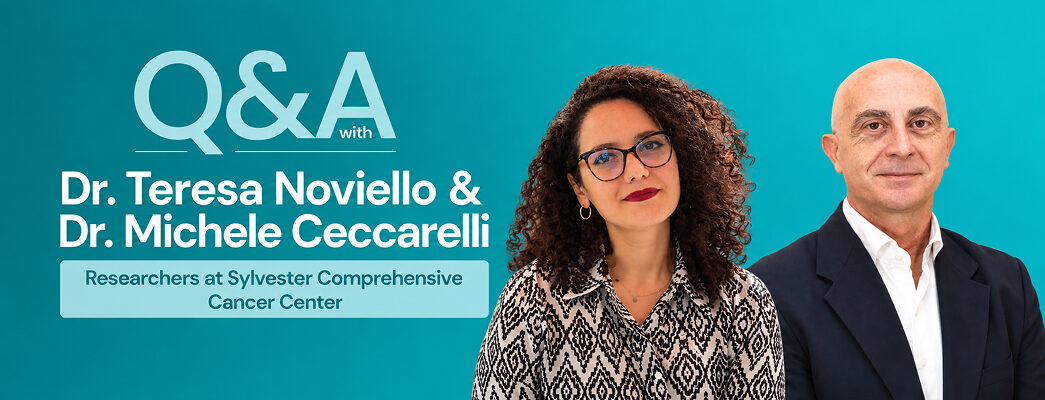
We spoke with Dr. Teresa Noviello and Dr. Michele Ceccarelli, researchers at Sylvester Comprehensive Cancer Center who recently co-authored the NIBIT-EPI-MESO study on immunotherapy in mesothelioma.
This study looked into DNA methylation, or how markers within our genetic code impact whether immunotherapy will be effective.
Below, the doctors answer questions about immunotherapy, who would most benefit from this treatment, and how their findings on DNA methylation could help more patients.
How is immunotherapy done for mesothelioma patients?
“Immunotherapy is usually given as a series of intravenous infusions over many months, with regular scans and clinic visits to check how the treatment is working and to monitor side effects,” said Dr. Noviello.
Mesothelioma immunotherapy drugs work to enhance the body’s natural immune response to cancer. Sometimes, mesothelioma cells can hide from the immune system, but immunotherapy stops this.
Dr. Noviello noted that in recent years, immunotherapies like Opdivo and Yervoy have become standard treatments for pleural mesothelioma based on successes in clinical trials.
“However, only a subset of patients gains a strong and long‑lasting benefit from immunotherapy,” Dr. Noviello said. “We still lack robust biomarkers that can reliably guide personalized treatment choices, which is exactly the gap our research on DNA methylation aims to address.”
What is DNA methylation, and how could it affect a patient’s response to immunotherapy?
“DNA methylation is a tiny chemical tag that the body adds to DNA to help control which genes are turned on or off, without changing the underlying genetic code itself,” said Dr. Noviello.
Dr. Ceccarelli noted that cancer tumors can use DNA methylation to hide from the immune system by switching off genes.
The doctors found that there were four DNA methylation subtypes:
- Demethylated (DEM)
- Low methylation (LOW)
- Intermediate (INT)
- CpG island methylator phenotype (CIMP)
“DEM and LOW tumors have an ‘inflamed’ microenvironment, rich in CD8‑positive T cells and CD20‑positive B cells, which are key for immunotherapy efficacy,” said Dr. Noviello. In other words, these subtypes respond better to immunotherapy.
Additionally, the NIBIT-EPI-MESO study found that DNA methylation might be reversible, allowing more patients to benefit from immunotherapy.
How successful is immunotherapy for mesothelioma?
Both doctors noted that whether immunotherapy will be the best treatment depends on each patient. Dr. Noviello highlighted cancer stage, location, and a patient’s general health as key factors.
Dr. Ceccarelli explained that immunotherapy seems to be more successful in patients with non-epithelioid mesothelioma cell types (biphasic and sarcomatoid). However, there are long-term survivors among all cell types.
He also noted that DNA methylation subtype influences whether immunotherapy will be a good choice for mesothelioma patients.
“The answer to ‘Why do some respond to immunotherapy?’ needs further research to understand how the methylation of tumor cells influences their ‘visibility,’” Dr. Ceccarelli said. “The immune system cannot attack what it cannot see.”
How could blood tests help predict which patients could benefit from immunotherapy?
The team’s recent study found that they could detect mesothelioma methylation signals in plasma through a blood test. This could help doctors determine if immunotherapy will be a good fit for mesothelioma patients.
“Tumors continuously shed fragments of DNA into the bloodstream, and those fragments carry their methylation marks with them,” said Dr. Ceccarelli.
“This suggests that in the future, we might develop less invasive blood tests, so‑called ‘liquid biopsies,’ to identify which mesothelioma patients are more likely to benefit from immunotherapy,” said Dr. Noviello.
How do you know that immunotherapy is working?
Both doctors noted that their research is focused on improving how to determine the effectiveness of immunotherapy.
“In immunotherapy, tumors can appear to grow initially because immune cells flood into them before they shrink,” said Dr. Ceccarelli. “The first assessment usually comes after two to three months, and sometimes patients and doctors need a second scan to be confident.”
“The most important signs come from a combination of scan results, how a patient feels, and the oncologist’s assessments,” Dr. Noviello added. “Doctors look for changes on imaging scans after the first few cycles of treatment. Some patients need longer before a clear answer is possible.”
Dr. Ceccarelli hoped that by developing a DNA methylation blood test, they could see if the cancer is responding to immunotherapy sooner. This would help mesothelioma doctors change treatment plans faster if the cancer isn’t responding.
Could drugs that target DNA methylation improve mesothelioma immunotherapy?
The researchers are currently looking into this. The hope is that by reducing methylation in highly methylated tumors, doctors could make them more responsive to immunotherapy.
“Targeting DNA methylation could, in principle, help convert some ‘cold’ tumors into ‘hot ’ones, making them more responsive to immunotherapy,” said Dr. Noviello.
Patients with higher levels of methylation in tumors would need to be treated with demethylating drugs as well as immune checkpoint inhibitors like Opdivo and Yervoy.
Dr. Noviello noted that a combination of demethylating drugs and immunotherapies has already shown promise in treating other cancers like melanoma.
What are my options if my cancer stops responding to mesothelioma treatments?
“Even when a first treatment does not work as hoped, it does not mean all options are exhausted,” Dr. Noviello said. “Depending on the patient’s situation, oncologists may consider other therapies or participation in clinical trials testing new combinations and novel agents.”
“Clinical trials should be part of that conversation from the start, not a last resort,” added Dr. Ceccarelli.
The researchers suggested that patients with mesothelioma come prepared for appointments so they can get the answers they need about clinical trials or other options.
“It can also help to take a family member or friend to appointments, write down questions in advance, and ask for written information about any trial so they can review it at home before deciding,” said Dr. Noviello.
How can patients stay hopeful after a mesothelioma diagnosis?
“Hope does not mean denying how serious mesothelioma is,” Dr. Noviello said. “It means finding sources of strength along the way, whether that is trusting a care team, staying engaged with new research and clinical trials, or focusing on moments with family and friends.”
Dr. Ceccarelli also noted that among the mesothelioma patients in their recent study, several had achieved complete remission for years, living free of cancer.
“We now have the beginning of a real ability to distinguish which patients benefit from immunotherapy and why,” he noted.
Get Help Exploring Immunotherapy & New Treatments for Mesothelioma
Doctors and researchers across the country continue to study ways to improve mesothelioma treatment options like immunotherapy, as well as new therapies.
With treatments like Opdivo and Yervoy now available and new research into DNA methylation, more people with mesothelioma may benefit from immunotherapy and live longer.
At Mesothelioma Hope, we’re committed to helping patients and families fight this aggressive cancer.
Our team can:
- Keep you up to date on the latest breakthroughs
- Help you find top doctors and cancer centers
- Explain how to pursue compensation for treatment
- Match you with clinical trials that fit your diagnosis
Call (866) 608-8933 or contact us now to speak with one of our Patient Advocates and find the resources you need.