


A lot changes after a mesothelioma diagnosis. Patients and their families are suddenly faced with new schedules, doctors, financial commitments, and realities about their futures. In addition to the logistical challenges, there are a lot of feelings that arise after a diagnosis — with depression and anger being two big ones.
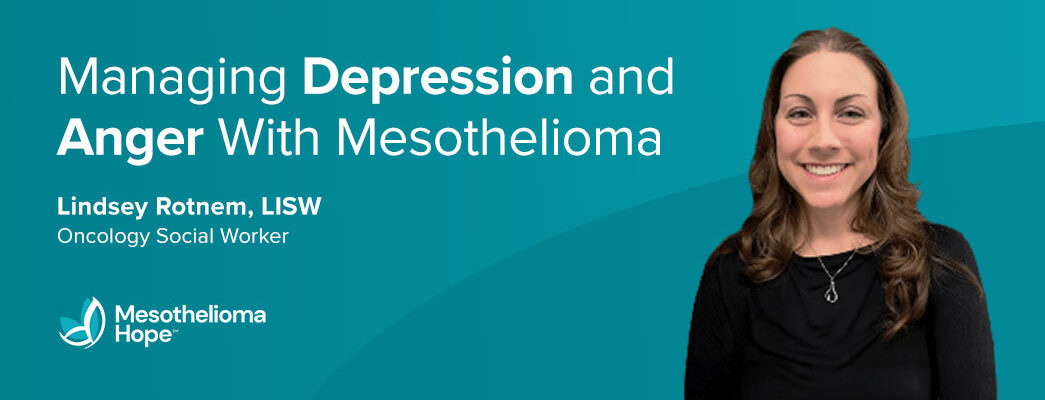
Mesothelioma Hope’s Oncology Social Worker, Lindsey Rotnem, LISW, leads our monthly support group meetings. Each month, she starts the call with a brief overview of a special topic that impacts mesothelioma patients and families. During a recent meeting, we focused on co-occurring depression and anger and went over strategies for coping with these feelings.
Below, Lindsey shares some of the ways patients may experience and manage anger and depression after a mesothelioma diagnosis.
How Depression Shows Up After a Mesothelioma Diagnosis
One thing that I notice when working with patients who have been recently diagnosed with cancer is the sadness that comes with loss — loss of physical function, loss of their job, loss of financial stability, loss of time, and eventually, loss of life.
Many patients lose hope and become fearful of what the future holds for them, which can spiral into depression, a clinical mood disorder that causes a persistent feeling of sadness. The connection between mesothelioma and depression is something we see often, as patients navigate significant changes in nearly every aspect of their lives.
Other symptoms of depression after a mesothelioma diagnosis include:
- Changes in sleeping habits
- Fatigue
- Feelings of worthlessness
- Loss of interest
- Weight loss or weight gain
These symptoms interfere with daily living and last for two weeks or more. People with cancer like mesothelioma are 3-5 times more likely to experience depression than the general population, according to a study published in the European Journal of Cancer.
One of the most impactful ways to help manage depression is to plug into a community that understands what you’re going through. Our monthly Mesothelioma Support Group allows patients and family members to speak freely about their experiences with others. Sign up for our next session below.

Why Anger Often Accompanies Depression
Anger, in combination with depression, has come up often in our support group meetings. Anger at the health care system, anger at the corporations that used asbestos, anger at the loss of physical abilities — and the list goes on.
Though anger is an emotion that’s typically easy to see, it’s really the tip of the iceberg, meaning that other emotions are hidden underneath. Anxiety, stress, fear, overwhelm, and disappointment are some of the most common feelings underlying anger.
“Where there is anger, there is always pain underneath.”
As with many emotions and mental health conditions, anger and depression can both be recognized by a cycle.
The cycle of anger and depression can look like:
- A triggering event or stressor occurs
- This causes negative thoughts, feelings, or physical symptoms
- These reactions influence behavior and how we respond to the initial event
What Mesothelioma Patients Are Saying
Many of the mesothelioma patients we speak with report difficulty concentrating after their diagnosis, in addition to sleep disturbances. For example, a racing mind makes it harder to fall asleep or stay asleep. Patients also describe physical symptoms such as clenching their jaws or fists and changes in their breathing patterns.
In our support group discussions, patients and families often talk about how a mesothelioma diagnosis can lead to a lack of motivation, loss of interest, and uncertainty about the future.
Many of our members have coped with these feelings by reading books they found encouraging and helpful, and recommending them to other group members. Some have spoken to their health care providers about medications to help manage symptoms. Others have leaned on social support, like friends, family, and spiritual teachers.
Coping Strategies for Managing Depression and Anger
Cognitive-behavioral methods, such as challenging irrational thoughts, focusing on what you can control, and practicing gratitude, can be helpful for managing mental health and mesothelioma.
Being aware of triggers, knowing your warning signs, using diversions, or taking a time out can help break the anger cycle. Developing healthy coping skills can also make it easier to manage difficult emotions as they arise.
Deep breathing exercises, as well as physical movement, can also be great tools for depression and anger. However, these may be more difficult for patients with pleural mesothelioma due to symptoms like shortness of breath and fatigue.
And of course, getting in touch with a counselor or joining a support group can be great ways to feel less alone on your mesothelioma journey.
Get Help Navigating a Mesothelioma Diagnosis
Our team is here to help you get the resources and support you need to manage this diagnosis. We encourage you to join our monthly support group meetings to connect with others who understand the challenges of living with mesothelioma.
Many patients and families find it helpful to have someone they can turn to for answers. Mesothelioma Hope can help you navigate the challenges that come with a diagnosis and connect you with resources tailored to your needs.
We can also help you get a second opinion, learn more about treatment options, and explore financial support options. Give us a call at (866) 608-8933 or fill out our contact form to learn more about how we can support you.