

Every new mesothelioma treatment starts with the same goal: giving patients more options and better outcomes. One of the most promising areas of research relates to treatments that boost the immune system, as researchers study new ways to help it recognize and attack mesothelioma.
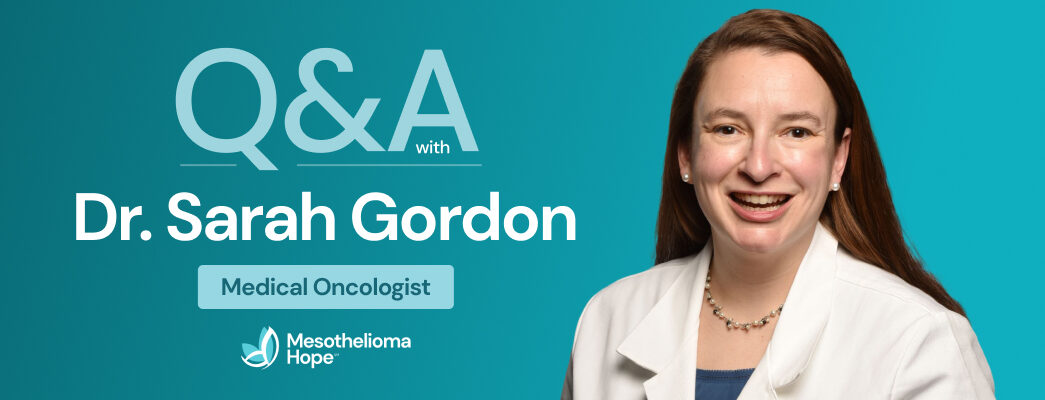
This includes an experimental approach called BiTE (bispecific T-cell engager) therapy, which thoracic medical oncologist Dr. Sarah Gordon is currently exploring as a way to treat patients with mesothelioma.
Dr. Gordon leads the Thoracic Malignancy Oncologic Group at Jefferson Health’s Sidney Kimmel Comprehensive Cancer Center. She’s committed to improving her patients’ well-being and leads rigorous studies of new therapies through clinical research.
Dr. Gordon spoke with Mesothelioma Hope about how BiTE therapy works for mesothelioma, how she chooses between today’s treatment options, and why she always has a backup plan ready.
How soon after diagnosis does treatment usually begin?
Once we have the mesothelioma diagnosis, we move very quickly. We’ll want to make sure that we get updated imaging so we fully understand the extent of the disease, and that usually involves CT scans or sometimes a PET scan.
We’ll often have these patients seen in what we call a multidisciplinary approach. This may include a thoracic surgeon, a radiation oncologist, and somebody like myself, a medical oncologist, because we want that initial collaborative input to decide on the best path forward for treatment.
Many times, our patients will be getting some kind of systemic therapy, either chemotherapy, immunotherapy, or both. Once we have that treatment decision in place, we can get started, hopefully within a week or two. Usually, we just need to get insurance approval and ensure everything is set up.
The biggest time frame is that initial period of getting all the information, and then once we have the information, we can make a decision and move quickly from there.
What factors determine whether a patient gets chemotherapy or immunotherapy?
One thing we consider is the type of mesothelioma, or the histology — how the cells look under the microscope, whether it’s epithelioid, non-epithelioid, or biphasic.
That helps predict which groups do better with chemotherapy versus immunotherapy, though for most patients, both approaches become part of the treatment journey.
The other thing that’s very important is talking with the patient about what their treatment options are and helping them understand what the side-effect profile looks like, to make sure we come to a consensus together about how they would like to approach their treatment.
How is immunotherapy given, and what side effects can patients expect?
Immunotherapy is given as an IV treatment, usually once every three weeks. Sometimes we use one immunotherapy drug, or sometimes two. With the two-drug regimen, one is given every three weeks and the other every six weeks, so on alternating visits, patients get one of two drugs.
Most patients on immunotherapy do quite well and won’t have any symptoms or side effects. If they do, they’re relatively mild — like a skin rash we treat with creams or lotions, or impacts on the thyroid or adrenal gland that we may only pick up on a blood test. Some patients get inflammation of the colon that causes diarrhea.
These side effects happen because immunotherapy activates the patient’s own immune system to fight the cancer cells, so what we’re seeing is the overactive immune system attacking normal parts of the body.
Less commonly, the immunotherapy can attack organs like the lungs, liver, heart, or kidneys, which is why patients get blood work done before every treatment so we can monitor for this.
What advice do you give patients to help them prepare for chemotherapy and immunotherapy?
We make sure everybody understands the possible side effects — we discuss them in person and send patients home with written information to review. The team also talks with patients about what to expect in the infusion room: they can eat beforehand, bring food or snacks, and bring something to pass the time, like a phone, tablet, book, or puzzle.
It’s also important that they know when to contact us. I see my patients every three weeks before treatment, but I always want them and their families to reach out between visits if they have questions or new symptoms, rather than waiting for the next appointment.
That’s what I tell my patients: you just tell me, and I’ll decide if it’s important or related to treatment. I’m the one who wants to make that decision. You don’t have to.
What happens if the first treatment doesn’t work?
What I tell my patients is that I’m always coming up with a plan A, B, C, and D. That’s my responsibility — to know the different options and talk through them with you as we need to.
If we start with immunotherapy and it stops working or causes side effects, we can talk about chemotherapy, or the reverse if we started with chemo. We also look at clinical trials.
We sometimes talk about the risks and benefits of more treatment, too. Is the benefit worth the possible side effects? These are conversations I have with my patients both at diagnosis and along the way as we have to make treatment decisions.
How should patients bring up clinical trials with their care team?
I always encourage my patients to ask about clinical trials, even something as simple as, “Is there one available for me now?” As an oncologist and researcher involved in drug development, I’m always thinking about trials at every visit, but it helps when patients bring it up, too.
Sometimes that means getting a second opinion to see if there’s a trial at another location you might be eligible for.
Oncologists who treat mesothelioma tend to know each other and know what’s available, and I always tell my patients that getting a second opinion doesn’t offend me — it’s about making sure they’re comfortable with the treatment plan or aware of any trial options.
What emerging mesothelioma treatments are showing promise?
Right now, the most exciting things are drugs early in development that target new mechanisms like BiTE cancer therapy, which uses bispecific T-cell engagers.
These are compounds that bind to a protein on cancer cells — in the case of mesothelioma, the protein mesothelin — and bring it into close contact with T cells, the immune cells that fight and destroy foreign material like cancer cells.
There are also targeted, usually oral, drugs that block a specific part of the pathway driving that cancer cell’s growth. All of these are still very early in clinical development, but there are some clinical trials available, including here at Jefferson.
What do you tell patients who are struggling to stay positive?
I encourage my patients to have a strong support network, whether that’s through family or support groups our cancer center can connect them with.
I also encourage them to look into patient advocacy groups, as well as groups that help with compensation related to asbestos exposure, since that can ease the financial hardship of a cancer diagnosis.
Something I tell my patients is that I’m always going to be honest with them about what we know and don’t know — that’s my responsibility. If scans look good and treatment’s working, that’s good news, and we should enjoy that time and live life to the fullest. If we ever have to have a harder conversation, we’ll have it when the time comes.
Find a Mesothelioma Specialist for Treatment
If you’ve been diagnosed with mesothelioma, talking with a specialist can help you better understand your diagnosis and the treatments available to you. They can also explain whether a clinical trial or a newer therapy being studied may be appropriate in your situation.
During your appointment, you can:
- Review your diagnosis and pathology results
- Discuss chemotherapy and immunotherapy
- Ask whether you may qualify for a clinical trial
- Get answers to your questions and concerns
Mesothelioma Hope can connect you with experienced mesothelioma specialists and provide support as you research your care. Call (866) 608-8933 or contact us online to speak with a Patient Advocate.