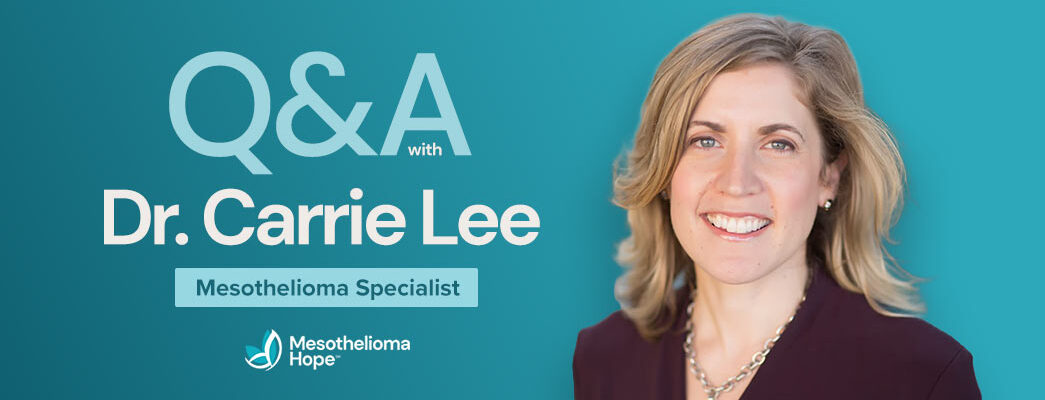


Dr. Carrie B. Lee is a medical oncologist, professor at the UNC School of Medicine, and Chief Medical Officer for Clinical Research at UNC Lineberger Comprehensive Cancer Center. She specializes in mesothelioma and lung cancer and has spent over two decades caring for patients while leading groundbreaking clinical research.
Throughout her career, Dr. Lee has witnessed significant advances in thoracic oncology, including the development of immunotherapies and targeted therapies that have helped more mesothelioma patients live longer.
In this Q&A, she discusses clinical trials, immunotherapy, multidisciplinary care, and what mesothelioma patients should know as they explore treatment options.
How do you help patients stay hopeful during treatment?
Hope is a really important thing for people to maintain during an illness like cancer. What’s important to consider during a critical illness is that hope can mean different things at different times. When a patient is diagnosed with early-stage cancer that’s highly curable, hope may be centered on a cure and long-term survival.
When illness is more advanced or aggressive, and a cure becomes less likely, hope can shift to whatever the patient values. That may be the hope to spend less time in the hospital, the hope to be free of pain, or the hope to have less shortness of breath.
We work together with nurses who perform a specialized function called navigation for cancer patients, as well as palliative care teams, to support patients physically and emotionally when they’re faced with illnesses like this.
Even when the most serious circumstances arise, I never want to remove all hope. Sometimes things happen that we can’t explain. The longer I do this, the more I realize that we’re not in charge, and that we’re here to love, help, and provide care and support for each other.
Even when we think we know how something’s going to play out, sometimes we’re wrong. I always try to hold space for all possibilities.
How has treatment for lung cancer and mesothelioma changed over the years?
When I became interested in thoracic malignancies, patients with advanced-stage disease were essentially considered incurable. They had very poor long-term survival rates, and most received the same chemotherapy.
Through clinical research, we’ve seen dramatic progress. In advanced non-small cell lung cancer, we’re now seeing the ability to cure some patients with stage 4 disease. Depending on the characteristics of their cancer, a cure may be possible for 20% to 30% of patients.
In mesothelioma, we’ve also gone from a very dismal prognosis to being able to achieve remission and long-term survival in some patients with the advent of immunotherapy.
I have a gentleman in my clinic right now with advanced mesothelioma who’s had a beautiful response to immunotherapy. He may be one of those patients who goes on to have excellent long-term disease control.
Why are clinical trials important for mesothelioma patients?
When I meet a new patient, I tell them that my goal is to do right by them and take care of them like I would anybody in my own family. But I also want to make cancer treatments better for all patients, and the only way we can do that is through clinical research.
Sometimes those goals align. I can take excellent care of a patient within the context of a clinical trial so they have the potential for benefit while also helping move the needle forward for future patients.
Clinical trials allow us to study different treatment combinations, such as immunotherapy and radiation or chemotherapy and radiation. Sometimes combinations turn out to be better than one treatment alone. Sometimes they lead to more side effects. Sometimes they don’t improve outcomes. That’s why we study these treatments carefully and compare them to what’s currently considered the standard of care.
One thing I always want patients to understand is that, in most circumstances, cancer clinical trials aren’t comparing treatment to a placebo. Usually, we’re taking the current standard treatment and adding something on top of that to see if we can make it work better.
Why is multidisciplinary care important for mesothelioma patients?
Cancer specialists come in a variety of forms. There are medical oncologists like myself who give medicines either in a vein or by pill. We partner very closely with radiation oncologists who deliver radiation therapy and surgeons who perform surgery.
We also have what’s called a multidisciplinary tumor board. In the case of a mesothelioma patient with stage 1 disease who could possibly be a candidate for surgery, we want to make sure those cases are discussed with all the specialists at the table.
The goal is thoughtful treatment planning, excellent communication, and care that’s delivered in keeping with expert guidelines.
How can patients prepare physically and emotionally for treatment?
Generally speaking, I don’t recommend drastic dietary changes. Oftentimes, patients come to me and say they’ve cut all sugar out of their diet. I tell them they don’t need to go crazy because I want to make sure they’re getting enough calories. When you have cancer, you’re prone to losing weight, and the cancer itself can have that effect on the body.
I encourage patients to focus on whole foods. One simple piece of advice is to shop the perimeter of the grocery store. That’s where you’ll find fruits, vegetables, dairy products, fish, poultry, and other protein sources. The middle of the grocery store tends to be where you’ll find ultra-processed foods.
I also think it’s important to get help, which is something not a lot of people are comfortable doing. If people offer to help prepare meals for you or provide rides, take them up on it. People usually want to help, but they don’t know what to do. Don’t be afraid to ask for help.
I also encourage patients to maintain physical activity. You don’t need to do anything extreme. Taking walks, getting fresh air, and spending time outdoors can help reduce stress and keep your body strong.
Finally, tap into your care team. That’s what we’re here for. Send messages, call your nurse navigator, and reach out when you need help. There are no bonus points for suffering when we’ve got supportive care strategies that can improve quality of life.
Why is tumor testing important for mesothelioma and lung cancer?
What’s really important for patients with a lung cancer diagnosis, and also for patients with mesothelioma, is making sure these tumors are tested comprehensively for mutations in the cancer DNA.
We recommend DNA sequencing and RNA sequencing because some cancers have driver mutations that can be targeted with pill treatments or other therapies.
Finding these mutations is critical because it can affect prognosis, uncover additional treatment options, and help guide patients toward clinical trials that may benefit them.
If you have lung cancer or mesothelioma and your tumor DNA hasn’t been sequenced, you should ask about it and potentially seek a second opinion. It may uncover additional treatment options that are already part of the standard of care or help identify a clinical trial that’s a good fit.
How does immunotherapy compare with chemotherapy?
Both are important tools. For some patients with advanced cancer whose tumors have high PD-L1 expression, we can use immunotherapy alone and avoid chemotherapy altogether.
More often, we find benefit from combining chemotherapy and immunotherapy, with better outcomes than chemotherapy alone.
In mesothelioma, we’ve also seen exciting results from immunotherapy. Clinical trials involving ipilimumab and nivolumab demonstrated a survival benefit over chemotherapy, and some patients achieved impressive long-term disease control.
It’s not a one-size-fits-all approach. Treatment depends on the type of cancer, the stage, and the characteristics of the tumor.
What role does palliative care play during treatment?
Sometimes people hear “palliative care” and think it means hospice, but that’s not the case.
Palliative care is meant to be used alongside chemotherapy, immunotherapy, targeted therapy, radiation, and other cancer treatments. It’s another layer of support focused on the symptoms of cancer and the side effects of treatment while helping patients maintain quality of life.
For my patients with advanced cancer, I routinely offer palliative care consultations. We often see patients together to make sure everyone understands the treatment plan and supportive care recommendations.
Palliative care can also help patients think about their goals and priorities. If their illness changes over time, those conversations can become especially meaningful.
What should patients know about clinical trials?
One of the biggest misconceptions is that clinical trials should only be considered when there are no other treatment options left. That’s simply not true.
Clinical trials can be appropriate in the frontline setting. Anybody with a new diagnosis of lung cancer or mesothelioma should ask their provider whether a clinical trial may be available.
Patients can also seek help from advocacy organizations and patient support groups that help connect people with research opportunities. With rare cancers like mesothelioma, advocacy organizations are often very familiar with available trials. They may even know more about current recruitment opportunities than providers who treat many different cancer types.
The important thing is not to think of clinical trials as a last resort. Ask early and keep an open mind.
Should mesothelioma patients seek a second opinion at a specialty center?
Mesothelioma is a rare cancer, and that makes experience especially important. Patients should strongly consider obtaining at least one opinion from a center with experience treating mesothelioma, particularly an academic cancer center.
That doesn’t necessarily mean all treatment has to happen far from home. Many patients can receive recommendations from a specialty center and then work with their local oncology team to receive much of their treatment closer to home.
That approach allows patients to benefit from expert guidance while minimizing travel whenever possible.
Connect With Mesothelioma Specialists Near You
The sooner you understand your mesothelioma treatment options, the sooner you can make informed decisions about your care.
Mesothelioma specialists can offer insight into:
- The latest therapies
- Active clinical trials
- Emerging treatments
- Palliative and supportive care
Mesothelioma Hope can help connect you with local doctors and cancer centers and provide support for you and your loved ones every step of the way.
Call (866) 608-8933 or contact us online to speak with a Patient Advocate and get started today.