

There isn’t a one-size-fits-all treatment plan for mesothelioma. Oncologists base each plan on a combination of factors, including the type of mesothelioma, the patient’s overall health, and the goals of care.
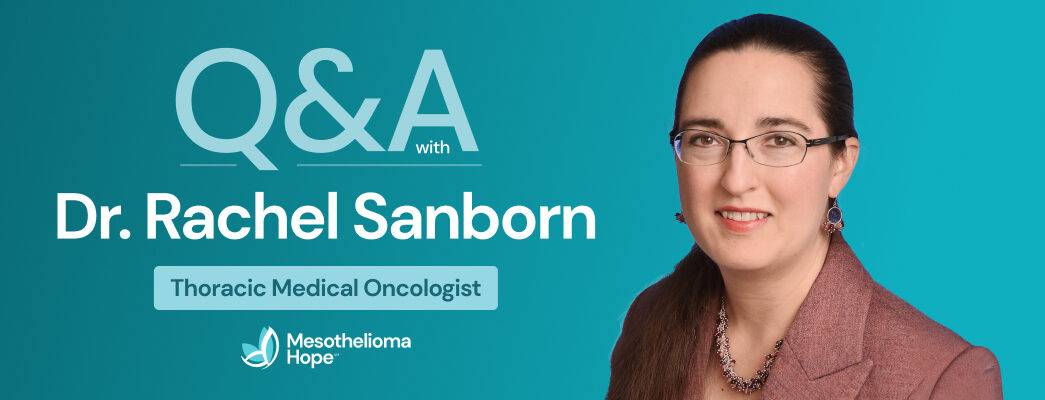
Dr. Rachel Sanborn is the Medical Director of the Thoracic Oncology Program at Providence Cancer Institute in Portland, Oregon, where she specializes in treating mesothelioma and lung cancer. In addition to her deep expertise in thoracic cancers, Dr. Sanborn is the Medical Director of the Phase I Clinical Trials Program, giving her a unique view into both research and practice.
In this Q&A with Mesothelioma Hope, Dr. Sanborn shares how she develops personalized treatment plans, what patients should know about preparing for chemo and immunotherapy, how to manage side effects, and insights into the clinical trial experience.
How long does it typically take for a patient to start treatment after diagnosis?
First, mesothelioma can take a while to diagnose. For example, someone with mesothelioma may have a pleural effusion drained multiple times before it shows cancer, and eventually a surgical biopsy may be needed to confirm the type of cancer. After that biopsy, there’s often a recovery period before treatment can begin.
Once a mesothelioma diagnosis is confirmed, it typically takes a few weeks to get pathology results back, meet with an oncologist, build a treatment plan, secure insurance authorization, and consider clinical trial options.
But it’s important to remember that, from the perspective of the person with mesothelioma, the story didn’t start at diagnosis. Everything leading up to it is part of their experience, too.
How do you decide which treatment approach is right for a patient?
The first thing I look at is the patient’s overall health and what we call performance status, which is essentially how active and functional someone is day-to-day.
Patients who are up and moving through their day tend to tolerate mesothelioma treatment (and other cancer treatments) much more safely and get more benefit from treatment, while patients who are sicker or spending most of the day in bed can actually be harmed by the same treatments.
From there, I look at the specific type of mesothelioma. Patients with epithelioid mesothelioma tend to benefit from platinum-based chemotherapy, sometimes combined with a VEGF (vascular endothelial growth factor) inhibitor like bevacizumab (Avastin®).
Patients with sarcomatoid or biphasic mesothelioma generally don’t get as much benefit from chemotherapy and tend to do better with combination immunotherapy, such as ipilimumab (Opdivo®) and nivolumab (Yervoy®).
I also look at whether a person with mesothelioma has enough support to get through treatment safely, including practical help like transportation to appointments. Once I know all of that, I can match the patient to the treatment that makes the most sense for them, as we discuss what will fit within their goals for their care.
Why does immunotherapy seem to work differently depending on the type of mesothelioma?
That’s still an area of active research, and we don’t have a definitive answer yet.
One theory is that epithelioid mesothelioma tends to be slower-growing, which can make it harder for the immune system to recognize. More aggressive cancers tend to accumulate more genetic mutations, which can make them easier targets for immunotherapy to trigger an immune response against.
This pattern shows up in conversations about many cancer types, but there’s no absolute answer yet on the specific biology driving it.
How do you help patients prepare for chemotherapy or immunotherapy?
Preparation starts with education. I talk through the treatment options, the schedule, the potential benefits, the risks, and the side effects that matter most to watch for. We talk about the importance of anti-nausea medications, communicating with the clinic about new symptoms, managing side effects early, and keeping symptoms under control.
Beyond that conversation, our nurse navigators, infusion nurses, and pharmacy team all reinforce that same education through printed materials and additional discussions. Hearing information from multiple sources in different ways helps it stick.
We also talk about staying active, resting when needed, staying hydrated, eating well, and involving our palliative care team for symptom management and emotional support.
What does an actual treatment session look like?
Treatments are given by IV every 3 weeks. A session starts with placing an IV and drawing blood to check counts and kidney and liver function. Patients then have a check-in with a provider to make sure it’s safe to receive treatment, review how they’re feeling, and fine-tune the plan based on any side effects from the last round.
After that, they may receive anti-nausea medication before getting chemotherapy or immunotherapy. Altogether, we tell patients to plan on being there for about half the day.
For chemotherapy, 4 to 6 cycles is the standard for mesothelioma. If the patient is receiving bevacizumab, that can either stop with chemotherapy or continue as maintenance therapy, depending on how they’re doing.
Immunotherapy is more of a chronic treatment, often continuing as long as a patient is doing well and the cancer is controlled, sometimes for 2 years (or possibly longer) before considering a break.
How do you know if treatment is working?
In oncology, “progression” means the cancer is growing, which is why we’re careful with that language in the exam room. What we hope to see on imaging is either shrinkage, which we call response, or stability, meaning nothing is growing or new. Both are good outcomes.
We also look at how a patient feels day to day, because imaging and symptoms don’t always tell the same story. For example, a tumor pressing on a nerve could cause increasing pain even if imaging looks stable, or a patient could feel much better even if the images look unchanged. We’re always looking at both imaging and symptoms together.
What side effects do you watch for with immunotherapy?
Immunotherapy activates the immune system, and we can’t fully control where that activation goes. Sometimes the immune system attacks the cancer, but it can also attack healthy tissue and cause autoimmune condition-type side effects. We can’t predict who will experience this or when.
Many immune-related side effects are mild, like dry eyes, dry mouth, a rash, or thyroid changes, and those can usually be managed while continuing treatment.
But there are also rare, serious risks, like colitis if the immune system attacks the intestines, or pneumonitis if it attacks the lungs. That’s why we ask patients to report new diarrhea, worsening cough or breathing changes, unusual fatigue, or appetite loss right away, since fatigue and appetite loss can also be signs that a hormone gland, like the adrenal glands, isn’t working the way it should.
There are also very rare risks, like the immune system attacking the heart, nerves, muscles, or skin. Each of these on its own is uncommon, but they’re serious enough that we watch closely and take any new symptoms seriously. Catching these side effects early can make a real difference in keeping people safe.
What about chemotherapy side effects?
For mesothelioma, chemotherapy usually combines a platinum agent with pemetrexed (Alimta®), which tends to have fewer severe side effects compared to many other chemotherapy regimens. Most patients keep their hair, though it may thin.
Patients can still experience fatigue, nausea, or changes in bowel habits, so we use an aggressive anti-nausea medication plan around each dose. Steroids are also given around each treatment to help prevent nausea and rash.
Patients also take vitamin B12 and folic acid, which help reduce how much white blood cell counts can drop during treatment, since low white blood cell counts can raise the risk of infection. We ask patients to watch for fevers at home and to let us know right away if one comes up.
Chemotherapy can also lower red blood cells or platelets, though it’s uncommon for patients to need a transfusion for this with the mesothelioma regimen. We monitor blood counts and kidney function closely at every visit and emphasize good hydration throughout treatment. Allergic reactions to the chemotherapy itself are possible but not common.
Why do you believe clinical trials matter so much for mesothelioma patients?
Without continually asking how we can do better, we never will. Every advance we’ve made is proof of that.
We use pemetrexed in mesothelioma today because research showed it worked better than what came before it. We use combination immunotherapy for certain patients because research showed it outperformed chemotherapy for a group of patients who previously had an average survival measured in months.
That number is still not good enough, but it’s far better than it was even 10 or 15 years ago, and that only happened because of clinical research.
Right now, researchers are studying whether combining immunotherapy and chemotherapy can work even better. Our center is participating in a study called e-VOLVE MESO, which is looking at exactly that question. There’s also exciting research into adoptive cellular therapies that train the immune system to better recognize and attack mesothelioma.
What would you say to a patient who’s hesitant about joining a clinical trial?
Many people worry that a clinical trial means they’ll get substandard care or a placebo instead of real treatment. That’s not the case.
Trials are carefully designed and go through strict regulatory review, both through the U.S. Food and Drug Administration (FDA) and through institutional review boards that evaluate the ethics of every study before it can open. Placebo-controlled trials generally aren’t used in this setting. Most trials compare a new approach against the current standard of care.
As both an investigator and someone who treats patients today, I’m deeply grateful to the people who participated in studies before now, because their participation is the reason treatment is better than it used to be.
Talk to a Mesothelioma Specialist Today
Hearing from mesothelioma specialists like Dr. Sanborn can help you better understand your options. But because every case is different, it’s important to talk with a doctor who regularly treats mesothelioma and stays up to date on the latest advances in care.
A mesothelioma specialist can help you understand:
- Which treatments may be right for you
- Whether you qualify for clinical trials
- New and emerging treatment options
- Ways to manage symptoms and side effects
Mesothelioma Hope can help you find an experienced specialist in your area. We’ve connected thousands of patients and families with leading mesothelioma doctors and cancer centers while providing support at every step of their treatment journey.
Call (866) 608-8933 or contact us online to speak with a Patient Advocate today.